AI Assistants•May 5, 2026
AI Chat Assistants vs. Hiring More Staff
Written by zedStrong AI Systems
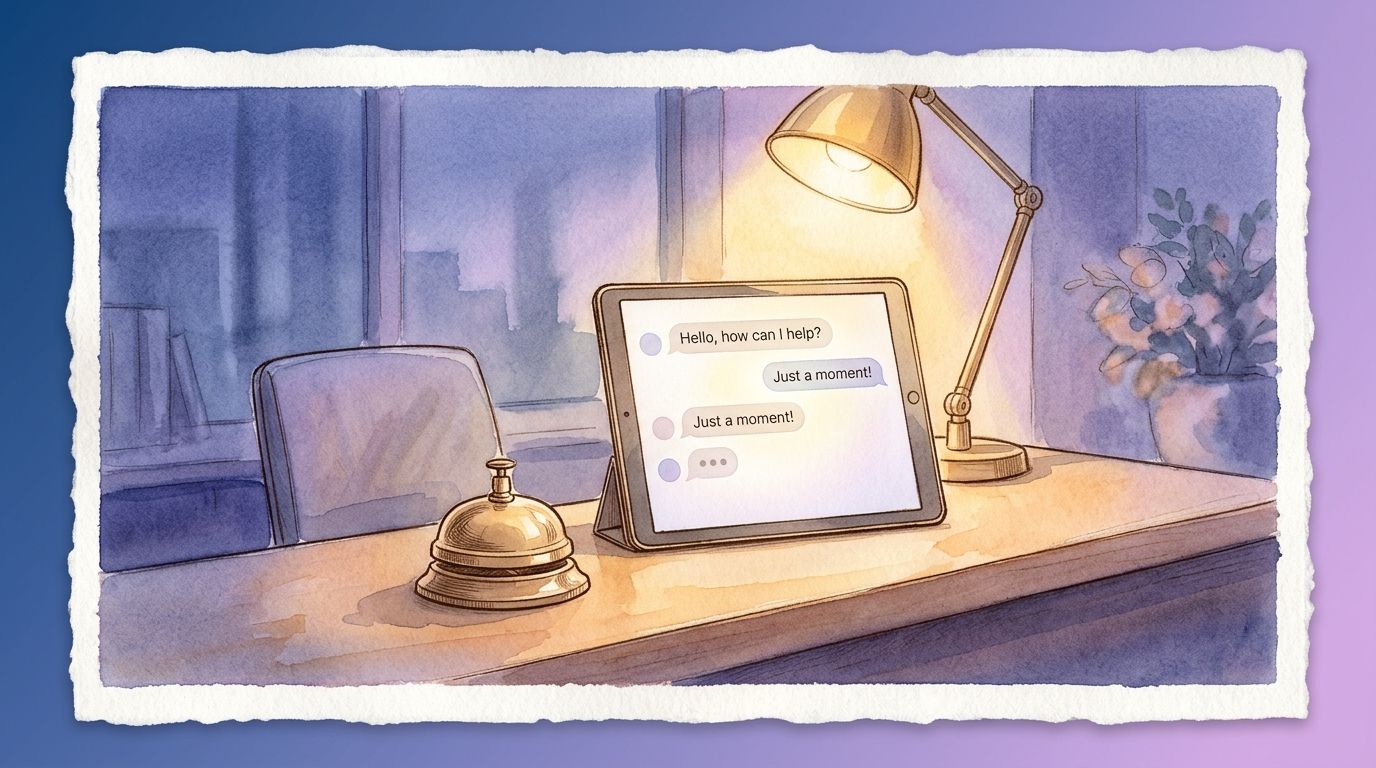
When inquiries start piling up faster than your team can answer them, the instinct is to hire. More people, more coverage, problem solved. It’s a reasonable instinct, and sometimes it’s the right call. But it’s worth looking at what an AI chat assistant covers first, since for a lot of businesses it handles a meaningful share of that same workload for a fraction of the cost.
Here’s how the two options actually compare, on cost and on coverage.
What each option covers
A staff hire brings judgment, flexibility, and the ability to handle situations nobody scripted for. A good front-desk or support hire can read a frustrated client, adjust their tone, solve a problem that doesn’t fit a template, and represent your business in a nuanced way. That’s real value, and it’s not something software replicates.
An AI chat assistant covers a narrower but still useful slice: answering common questions, capturing lead information, checking availability, and handing off to a human when a conversation needs one. It’s available outside business hours, doesn’t get overwhelmed during a rush, and answers the fifteenth question of the day exactly as well as the first.
The honest comparison isn’t “which one is better.” It’s which tasks belong to which option.
The cost side
Hiring typically means a base wage, plus payroll taxes and benefits, plus the time it takes to train someone before they’re fully productive. Depending on the role and region, a part-time front-desk or support hire often runs somewhere in the range of $2,000 to $4,000 a month once those costs are added up, and full-time roles run well past that. These are general, typical figures, not a quote for any specific business, since actual costs vary by role, location, and experience level.
An AI chat assistant setup is usually a smaller, more predictable cost: typically a one-time setup investment plus an ongoing monthly fee, often landing somewhere in the low hundreds of dollars a month for a small or midsized business, depending on volume and complexity. There’s no training ramp-up and no turnover risk. The cost stays roughly flat whether the assistant handles ten conversations a day or a hundred.
Turnover is worth factoring in on the staffing side too. Hiring and training a replacement typically costs several months of that role’s wages once recruiting time, onboarding, and the productivity dip during ramp-up are counted. An AI assistant doesn’t have a resignation to plan around, which makes its cost easier to predict a year out.
The coverage side
A staff member covers the hours they’re scheduled for, and that’s it. Evenings, weekends, and lunch breaks are usually gaps unless you’re paying for extra coverage. An AI assistant is available around the clock, which matters more than it might seem: a lot of inquiries come in after hours, and the business that answers first often wins the lead.
Staff coverage also has a ceiling. One person can only handle one conversation at a time. An AI assistant can handle many conversations simultaneously without any of them getting a slower response because of it.
Where staff clearly win is depth. A complicated question, an upset client, a negotiation: these go better with a person, every time.
Where they work together
Framing this as an either-or choice misses how most businesses actually end up using both. A common setup has the AI assistant handling the first response, answering routine questions, and collecting the details a human will need. Anything beyond that gets handed off to a person, who now starts the conversation with the easy part already done.
Instead of choosing between hiring and automating, a lot of businesses use the AI assistant to buy time. It absorbs the repetitive volume, and by the time you do bring on another hire, that person is picking up higher-value work instead of drowning in first-contact questions.
This also changes what the next hire looks like. Instead of hiring someone mainly to answer the phone and repeat the same information, you’re able to hire for judgment and relationship-building from the start, since the routine volume is already handled.
Making the call
If most of your unanswered inquiries are routine questions and after-hours leads, an AI chat assistant is usually the faster and cheaper fix. If what you’re missing is judgment and depth on complex conversations, that points toward a hire. For a lot of growing businesses, the real answer ends up being both, just not both at once.